
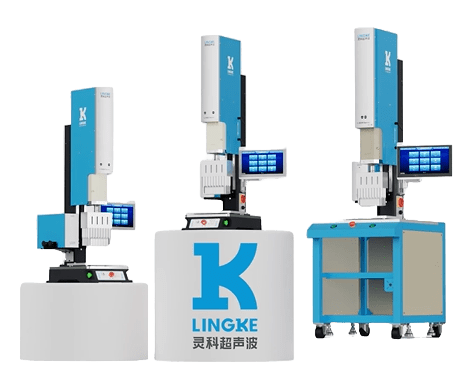
If you manufacture anything made of plastic — from a car dashboard to a syringe to a food pouch — there’s a good chance an ultrasonic plastic welding machine was involved somewhere in the production line. It’s one of the fastest, cleanest, and most reliable ways to permanently join thermoplastic parts, and it has quietly become the backbone of modern plastics assembly across automotive, medical, electronics, and packaging industries.
In this guide, we’ll break down exactly what an ultrasonic plastic welding machine is, how it works, the different types available, where it’s used, and — most importantly — how to choose the right one for your production needs in 2026.
Table of Contents
- What Is an Ultrasonic Plastic Welding Machine?
- How Ultrasonic Plastic Welding Works
- Key Components of an Ultrasonic Welding Machine
- Types of Ultrasonic Plastic Welding Machines
- Industries and Applications
- Benefits of Ultrasonic Plastic Welding
- Ultrasonic Welding vs. Other Plastic Joining Methods
- How to Choose the Right Ultrasonic Welding Machine
- Ultrasonic Plastic Welding Machine Price Guide
- Common Problems and Troubleshooting Tips
- Future Trends in Ultrasonic Welding Technology
- Frequently Asked Questions
1. What Is an Ultrasonic Plastic Welding Machine?
An ultrasonic plastic welding machine is industrial equipment that uses high-frequency sound waves — typically between 15 kHz and 40 kHz — combined with controlled pressure to generate localized frictional heat at the joint between two thermoplastic parts. This heat melts the plastic at the interface in milliseconds, and once the vibration stops, the molten material solidifies under pressure to form a permanent, molecular-level bond.
Unlike adhesives, screws, or solvent-based bonding, ultrasonic welding requires no additional consumables. It’s fast (weld cycles often complete in under one second to a few seconds), repeatable, and leaves a clean, strong joint — which is exactly why it has become the default choice for high-volume plastic assembly worldwide.
You’ll also see this equipment referred to as an ultrasonic plastic welder, ultrasonic welding press, ultrasonic plastics assembly system, or simply an ultrasonic welder.
2. How Ultrasonic Plastic Welding Works
The ultrasonic welding process happens in four rapid stages:
- Clamping – The two plastic components are positioned in a fixture (nest) and clamped under controlled pressure.
- Vibration – A horn (sonotrode) vibrates vertically at ultrasonic frequency, transmitting energy into the joint interface.
- Melting – Friction at the contact surface generates intense, localized heat, melting the plastic at the joint without affecting the rest of the part.
- Solidification (Hold Time) – Vibration stops, pressure is maintained briefly, and the molten plastic cools and solidifies into a strong, permanent bond.
The entire process is typically governed by a digital ultrasonic generator, which converts standard electrical frequency (50/60 Hz) into the high-frequency signal the transducer needs, while also monitoring weld parameters like amplitude, energy, time, and distance for consistent, repeatable results.
3. Key Components of an Ultrasonic Welding Machine
Every ultrasonic plastic welding machine — whether handheld or fully automated — is built around the same core “acoustic stack”:
- Ultrasonic Generator (Power Supply): Converts electrical power into high-frequency electrical signals.
- Transducer (Converter): Converts the electrical signal into mechanical vibration using piezoelectric elements.
- Booster: Amplifies or reduces the amplitude of vibration before it reaches the horn.
- Horn (Sonotrode): Delivers vibration directly to the plastic part; custom-designed per application.
- Fixture/Anvil (Nest): Holds the part securely in place during welding.
- Actuator/Press: Pneumatic or servo-driven mechanism that applies and controls welding pressure.
- Control System/HMI: Touchscreen or digital interface for setting and monitoring weld parameters.
Modern machines increasingly use servo-driven actuators instead of pneumatic ones, offering far more precise control over force, distance, and velocity throughout the weld cycle — a major reason servo ultrasonic presses have become the industry standard for high-precision applications like medical devices.
4. Types of Ultrasonic Plastic Welding Machines
By Configuration
- Handheld Ultrasonic Welders – Portable, lightweight units for manual spot welding, staking, and repair work.
- Benchtop/Tabletop Machines – Compact standalone systems ideal for R&D, prototyping, and low-to-mid volume production.
- Column-Type Ultrasonic Presses – Standard industrial configuration for mid-to-high volume manufacturing.
- In-Line/Automated Systems – Integrated directly into conveyor or assembly lines for continuous, high-speed production.
- Rotary Indexing Machines – Multi-station systems that combine welding with other assembly steps on a single rotary table.
- Robotic Ultrasonic Welding Systems – Robot-mounted horns for complex, multi-angle, or contoured parts.
By Drive Technology
- Pneumatic Ultrasonic Welders – Cost-effective, reliable for standard applications.
- Servo-Controlled Ultrasonic Presses – Precision force/distance control, ideal for delicate or high-tolerance parts.
By Frequency
Common operating frequencies include 15 kHz, 20 kHz, 28 kHz, 30 kHz, 35 kHz, and 40 kHz. Lower frequencies (15–20 kHz) generate higher amplitude and are better suited to larger, tougher parts, while higher frequencies (30–40 kHz) suit smaller, more delicate components.
5. Industries and Applications
Ultrasonic plastic welding machines are used wherever consistent, strong, adhesive-free plastic joints are required:
- Automotive: Dashboards, door panels, air filters, sensor housings, wiring harness components, wheel arch trims, tail lamps.
- Medical Devices: Syringes, IV components, filters, dialysis equipment, infusion sets, surgical masks — processes that demand sterile, contamination-free, validated welds.
- Electronics: Connectors, switches, plastic housings, battery enclosures.
- Packaging: Blister packs, pouches, clamshells, tubes, food and beverage containers requiring airtight, leak-proof seals.
- Textiles & Nonwovens: Hygiene products, filters, technical textiles, face masks.
- Consumer Goods: Toys, appliances, and general plastic product assembly.
6. Benefits of Ultrasonic Plastic Welding
- Speed: Weld cycles complete in under a second to a few seconds, dramatically increasing throughput.
- No Consumables: Eliminates the cost and mess of adhesives, solvents, or fasteners.
- Strong, Clean Joints: Produces hermetic, cosmetically clean welds with minimal flash.
- Energy Efficient: Uses significantly less energy than thermal or hot-plate welding methods.
- Easy to Automate: Integrates seamlessly into automated and robotic production lines.
- Repeatable Quality: Digital process controls ensure consistent results, weld after weld.
- Environmentally Friendly: No emissions, no chemical waste, reduced scrap rates.
7. Ultrasonic Welding vs. Other Plastic Joining Methods
| Method | Cycle Time | Consumables | Joint Strength | Automation | Best For |
|---|---|---|---|---|---|
| Ultrasonic Welding | Very Fast (0.5–3 sec) | None | High | Excellent | High-volume precision assembly |
| Hot Plate Welding | Moderate | None | High | Good | Larger parts, irregular surfaces |
| Vibration Welding | Moderate | None | High | Good | Large, complex geometries |
| Adhesive Bonding | Slow (cure time) | Adhesive | Variable | Limited | Dissimilar materials |
| Mechanical Fastening | Fast | Fasteners | Variable | Good | Parts needing disassembly |
Ultrasonic welding generally wins on speed, cleanliness, and automation-readiness — but for very large parts or uneven joint surfaces, hot plate or vibration welding may be a better fit.
8. How to Choose the Right Ultrasonic Welding Machine
Before buying or specifying a machine, evaluate:
- Material Compatibility – Not all plastics weld equally well. Amorphous plastics (ABS, PC, PS) generally weld better than semi-crystalline ones (PP, PE, nylon), which require more precise process control.
- Production Volume – Low-volume or prototyping needs may only require a benchtop unit; high-volume lines need in-line or rotary automated systems.
- Part Geometry & Size – Determines horn design, fixture complexity, and frequency selection.
- Precision Requirements – Medical or electronics applications often justify the added cost of servo-driven systems.
- Power Rating – Ranges from a few hundred watts (handheld) up to several kilowatts (industrial presses).
- Process Monitoring Needs – Look for real-time weld curve monitoring, data logging, and traceability if you operate in a regulated industry (e.g., medical, automotive).
- After-Sales Support & Tooling Expertise – Horn and fixture design is often the difference between a good weld and a failed one; a manufacturer with strong applications engineering support is invaluable.
- Certifications – CE, ISO, and (for medical applications) FDA-aligned documentation and validated weld recipes.
9. Ultrasonic Plastic Welding Machine Price Guide
Pricing varies widely based on configuration and automation level:
- Handheld/Portable Units: Roughly $1,500 – $6,000
- Benchtop/Tabletop Systems: Roughly $4,000 – $15,000
- Industrial Column Presses (Pneumatic): Roughly $8,000 – $25,000
- Servo-Driven Precision Presses: Roughly $15,000 – $50,000+
- Fully Automated/In-Line Systems: $30,000 to well over $100,000, depending on integration complexity, tooling, and number of welding stations
These figures are general market ranges; always request a quote based on your specific part, material, and volume requirements, since custom tooling significantly affects final cost.
10. Common Problems and Troubleshooting Tips
| Problem | Likely Cause | Fix |
|---|---|---|
| Weak/inconsistent welds | Incorrect amplitude or pressure | Recalibrate generator settings; check booster/horn match |
| Excessive flash/burn marks | Too much energy or weld time | Reduce amplitude, weld time, or trigger pressure |
| Horn overheating | Continuous high-duty cycle without cooling | Allow cooldown intervals; check horn design |
| Part marking/cosmetic damage | Poor fixture design or excessive pressure | Redesign nest fixture; reduce clamping force |
| Frequency lock failure | Worn transducer or loose stack components | Inspect and retighten/replace acoustic stack |
11. Future Trends in Ultrasonic Welding Technology (2026 and Beyond)
The ultrasonic plastic welding machine market continues to evolve quickly:
- Industry 4.0 Integration: Real-time weld data logging, IoT connectivity, and predictive maintenance are becoming standard on mid-to-high-end systems.
- Servo-Electric Dominance: Servo-controlled presses continue to replace pneumatic systems for their precision and repeatability.
- EV and Battery Applications: Growth in electric vehicle production is driving demand for both plastic and metal ultrasonic welding, especially for battery components and wiring harnesses.
- Sustainability Focus: Energy-efficient generators and reduced scrap rates are increasingly important purchasing criteria as manufacturers pursue greener production.
- AI-Assisted Process Optimization: Emerging systems use adaptive algorithms to automatically adjust weld parameters in real time for varying material batches.
12. Frequently Asked Questions
Q1: What plastics can be ultrasonically welded? Most thermoplastics can be ultrasonically welded, including ABS, PC, PP, PE, PA (nylon), PVC, and PEEK. Amorphous plastics generally weld more easily than semi-crystalline ones.
Q2: How long does an ultrasonic weld take? Most welds complete in 0.5 to 3 seconds, though larger or more complex parts may take slightly longer.
Q3: Can ultrasonic welding join dissimilar plastics? Generally no — for a strong molecular bond, both materials need to be chemically compatible. Dissimilar plastics typically require other joining methods.
Q4: Is ultrasonic welding suitable for small businesses or only large factories? Both. Handheld and benchtop machines make ultrasonic welding accessible for small-batch production, R&D, and repair work, while industrial presses and automated lines serve high-volume manufacturers.
Q5: How do I maintain an ultrasonic welding machine? Routine maintenance includes inspecting and retorquing the acoustic stack, checking horn wear, cleaning fixtures, and periodically recalibrating the generator for consistent amplitude output.
Final Thoughts
An ultrasonic plastic welding machine isn’t just industrial equipment — it’s often the difference between a production line that hits its throughput targets and one that doesn’t. Whether you’re assembling medical devices that demand validated, repeatable welds or producing high volumes of automotive components, choosing the right machine, frequency, and tooling setup will directly determine your weld quality, cycle times, and long-term production costs.
If you’re evaluating ultrasonic welding equipment for your facility, focus on matching the machine’s power, frequency, and automation level to your actual part requirements — not just the lowest sticker price. The right partner will also support you with application testing, horn design, and process validation, which matters far more than the machine alone.
Looking for the right ultrasonic plastic welding machine for your production line? [Contact us today] for a free application assessment and quote tailored to your part design, material, and volume requirements.