
Ultrasonic wire harness welding machines have become essential equipment in modern automotive, electronics, and EV manufacturing industries. Unlike traditional soldering or crimping methods, ultrasonic welding creates strong, reliable, and corrosion-free joints between multiple wires without the use of heat, flux, or solder. This makes it ideal for joining copper and aluminum wires of varying gauges quickly and efficiently. In this guide, we’ll explore how ultrasonic wire harness welding works, its key benefits, industry applications, and what to look for when choosing the right machine for your production line.
What Is an Ultrasonic Wire Harness Welding Machine ?
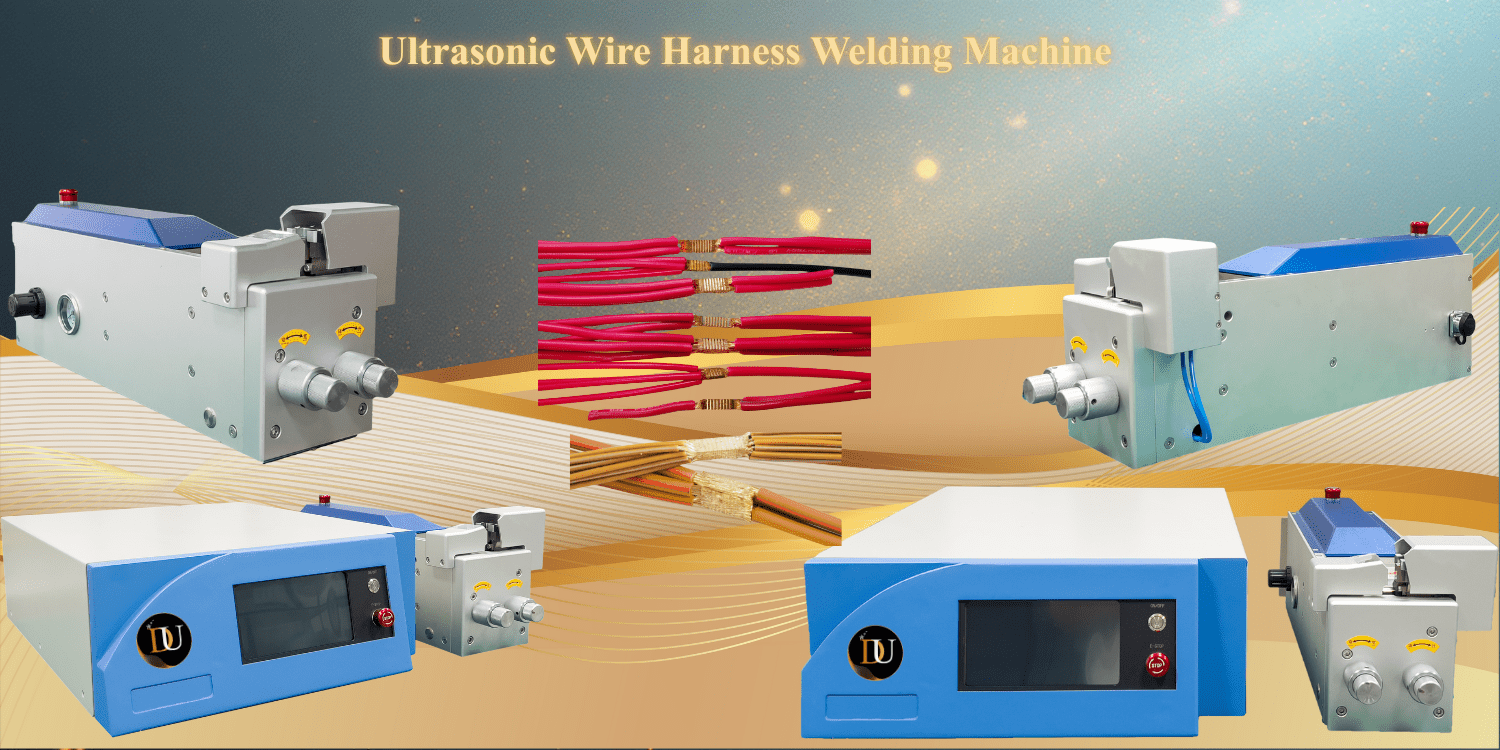
An ultrasonic wire harness welding machine is an industrial device that joins multiple wire strands into a single, solid splice using high-frequency ultrasonic vibrations. Instead of melting metal with heat like soldering or brazing, the machine applies mechanical vibration and pressure to the wire ends, causing the metal surfaces to bond at a molecular level.
This process is widely used to weld wire harnesses in vehicles, appliances, and electronic devices, where multiple wires often need to be combined into a single terminal point. The result is a clean, flux-free, gas-tight joint with excellent electrical conductivity and mechanical strength.
How Ultrasonic Wire Harness Welding machine Works.
The ultrasonic welding process follows a few key steps:
- Wire Preparation – Stripped wire ends are placed into the welding anvil and positioned under the sonotrode (welding horn).
- Clamping – The machine applies controlled pressure to hold the wires firmly in place.
- Ultrasonic Vibration – High-frequency vibrations (typically 20 kHz–40 kHz) are transmitted through the sonotrode, generating friction between the wire strands.
- Molecular Bonding – The friction breaks down oxide layers on the wire surface, allowing the metal to fuse together without melting.
- Cooling & Release – The finished weld cools almost instantly, and the joint is released from the machine.
This entire cycle typically takes just 0.5 to 2 seconds per weld, making it significantly faster than traditional soldering methods.
Key Benefits Over Traditional Soldering & Crimping
Ultrasonic wire harness welding offers several advantages that make it the preferred choice for high-volume manufacturing:
- No Heat Required – Eliminates the risk of thermal damage to wire insulation or nearby components.
- No Flux or Solder Needed – Reduces material costs and eliminates corrosive flux residue.
- Stronger, More Reliable Joints – Produces a solid-state bond with lower electrical resistance than crimped or soldered connections.
- Faster Cycle Times – Ideal for high-speed, automated production lines.
- Environmentally Friendly – No fumes, no solder waste, and lower energy consumption compared to thermal welding methods.
- Consistent Quality – Automated parameters ensure repeatable weld strength across large production batches.
Industry Applications
Ultrasonic wire harness welding machines are used across a wide range of industries, including:
- Automotive Manufacturing – Joining wire harnesses for dashboards, engine components, and lighting systems.
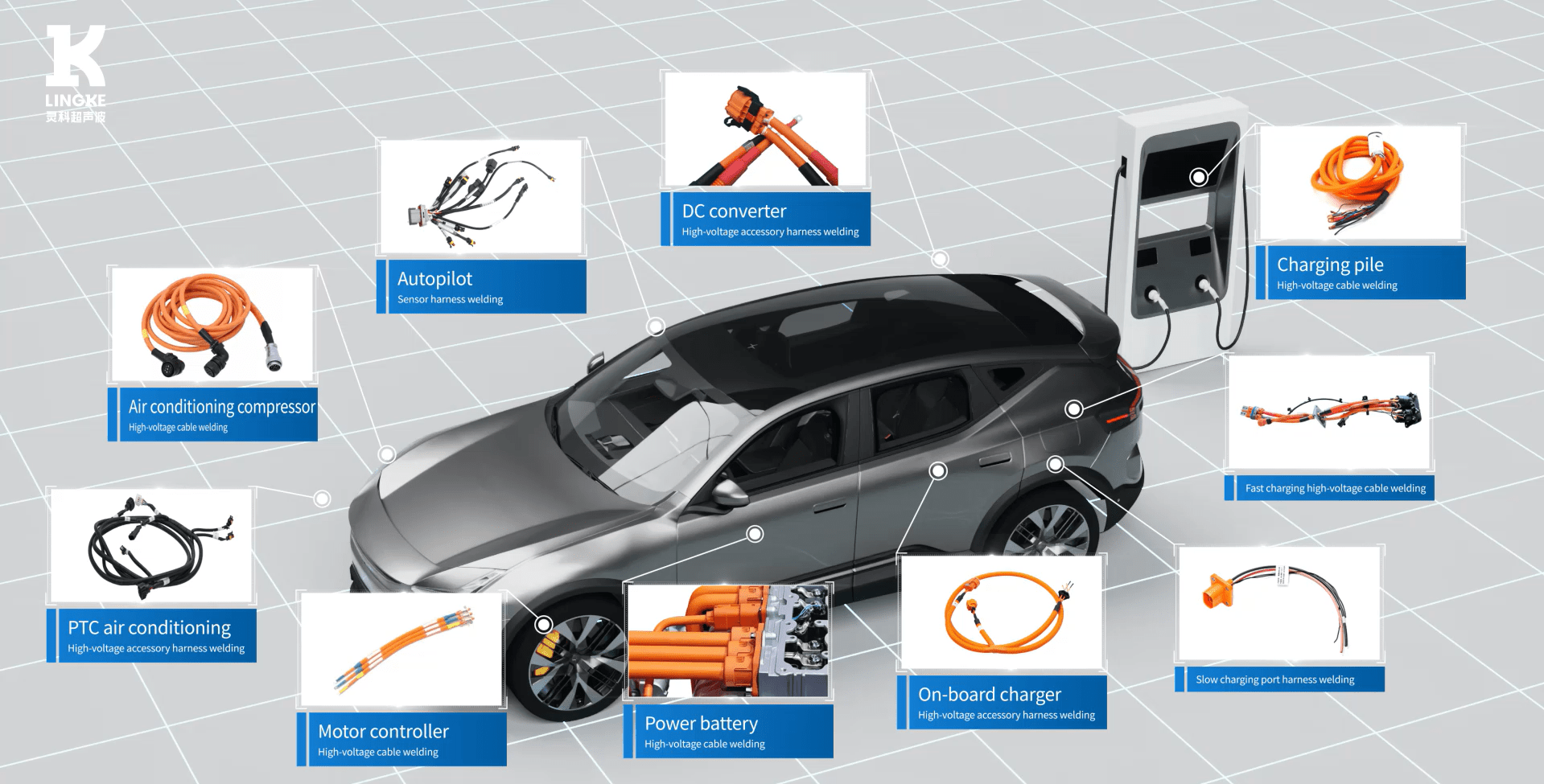
- Electric Vehicles (EVs) – Welding battery tabs, busbars, and high-current wire connections in EV battery packs.
- Consumer Electronics – Producing compact, reliable wire connections in appliances and electronic devices.
- Aerospace & Defense – Creating durable, vibration-resistant wire joints for critical systems.
- Home Appliances – Welding motor windings and internal wiring for washing machines, refrigerators, and more.
Key Features to Look for Before Buying
When selecting an ultrasonic wire harness welding machine, consider the following features:
- Weld Width Capacity – Ensure the machine can handle your required wire gauge and strand count.
- Programmable Controls – Digital controls allow precise adjustment of weld time, pressure, and amplitude.
- Automation Compatibility – Look for machines that integrate easily with robotic arms or conveyor systems for automated production.
- Sonotrode Durability – High-quality titanium sonotrodes last longer and maintain weld consistency.
- Ease of Maintenance – Machines with accessible components reduce downtime during servicing.
- Safety Features – Enclosures, emergency stop functions, and noise reduction housing are important for operator safety.
Key Factors Affecting Price
The cost of an ultrasonic wire harness welding machine can vary widely based on:
- Welding capacity (wire gauge range and strand count)
- Level of automation (manual, semi-automatic, or fully automated)
- Brand reputation and build quality
- Additional features like data logging, quality monitoring, or IoT connectivity
- After-sales support and warranty terms
Entry-level manual machines are more affordable, while fully automated systems designed for high-volume EV or automotive production carry a higher upfront investment but offer greater long-term efficiency.
Maintenance Tips for Longer Machine Life
Proper maintenance ensures consistent weld quality and extends the lifespan of your ultrasonic welding equipment:
- Regularly inspect and clean the sonotrode and anvil surfaces to remove metal debris.
- Check for wear on the welding tips and replace them as needed.
- Calibrate weld parameters periodically to maintain consistent output.
- Keep the machine’s cooling system clean and functioning properly.
- Schedule routine servicing with the manufacturer or a certified technician.
Frequently Asked Questions
Q: Can ultrasonic welding join dissimilar metals? A: Yes, ultrasonic welding can join dissimilar metals such as copper and aluminum, which is difficult to achieve with traditional soldering.
Q: Is ultrasonic wire harness welding suitable for small-scale production? A: Yes, manual and semi-automatic machines are well suited for smaller production runs, while automated systems are better for high-volume manufacturing.
Q: How strong is an ultrasonic weld compared to soldering? A: Ultrasonic welds typically offer lower electrical resistance and higher mechanical strength than soldered joints, since they create a true metallurgical bond.
Q: Do ultrasonic welding machines require special training to operate? A: Basic operation is straightforward, but proper training on parameter settings and maintenance is recommended to ensure consistent weld quality.
Conclusion
Ultrasonic wire harness welding machines offer a faster, cleaner, and more reliable alternative to traditional wire joining methods. Whether you’re manufacturing automotive components, EV battery packs, or consumer electronics, investing in the right ultrasonic welding equipment can significantly improve production efficiency and product quality. Consider your production volume, wire specifications, and automation needs carefully before choosing the machine that best fits your operation.
Ready to upgrade your production line? Request a free quote on our ultrasonic wire harness welding machines today.
